Louvre Couture: A Fashion Exhibition Like No Other
Louvre Couture may be the most important Paris fashion “show” ever staged. In 2025, the Louvre presented around 100 fashion pieces positioned throughout its galleries, placed alongside the historical objects that may have inspired their design. By giving fashion equal footing with decorative arts, the museum brought many of its own artefacts back into focus, reaffirming their relevance for a contemporary audience. a tranche of its own artefacts into the spotlight restating their relevance for a new generation.
This review focuses on the designers involved, ten personal standout pieces, and the experience of seeing fashion placed directly within the Louvre’s permanent collections. The photographs reflect both the clothes and their surroundings, showing how context, setting, and scale shaped the impact of the Louvre Couture.
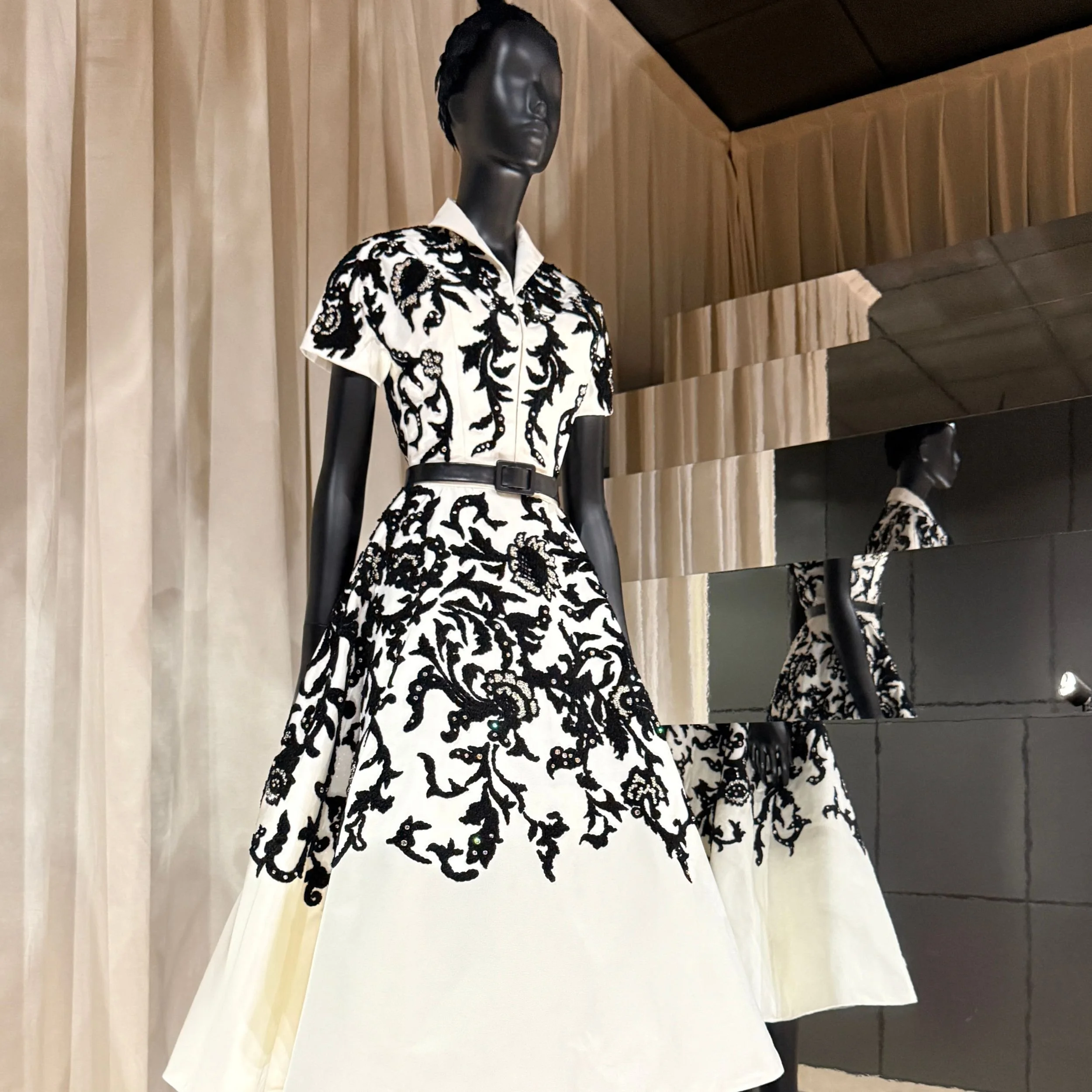
Christian Dior dress from 1949 the opening dress at the the Louvre Couture exhibition
Louvre + Fashion
Spread across nearly 100 exhibits, this fashion show takes you on a journey through the centuries, as interpreted by some of the world’s most celebrated designers. Some pieces take centre stage — commanding entire rooms or drawing the eye the moment you enter. Others are so seamlessly integrated into their surroundings that you could walk past without noticing. A Chanel cuff tucked among medieval relics, a bodice that echoes the upholstery of a salon — the line between fashion and artefact often blurs. It becomes something of a treasure hunt. The breadth of what’s on display is remarkable.
Fashion at the Louvre - The Designers and Fashion Houses Showcased in Louvre Couture
From Cristóbal Balenciaga to Giambattista Valli, the range of designers and maisons represented is breathtaking. You’ll find archival pieces by Chanel, Yves Saint Laurent, Schiaparelli, Dior, Alaïa, and Jean Paul Gaultier, alongside contemporary interpretations by Erdem, Jacquemus, Marine Serre, and Jonathan Anderson. It’s a dialogue not just between fashion and art, but between generations of designers.
It’s easy to become overwhelmed by the sheer variety, or distracted by the other objets woven in across the rooms of the Richelieu Wing. There may be a particular designer or house you want to see — or, like me, you may go in with an open mind. Below are ten of my favourite pieces from the exhibition.
Our Ten Favourite Pieces from Louvre Couture
Here are ten pieces that stood out — not just for their beauty, but for how they were presented within the Louvre’s galleries. They’re listed by exhibit number to make them easier to find when you visit.
Each number refers to its listing in the official exhibition guide.
10/11 – Chanel by Karl Lagerfeld, ‘Paris-Byzance’ Collection (2010–2011)
The way this gilded cuff and necklace were displayed alongside medieval treasures was extraordinary. You had to look twice to spot the Chanel logo nestled among 13th-century relics.
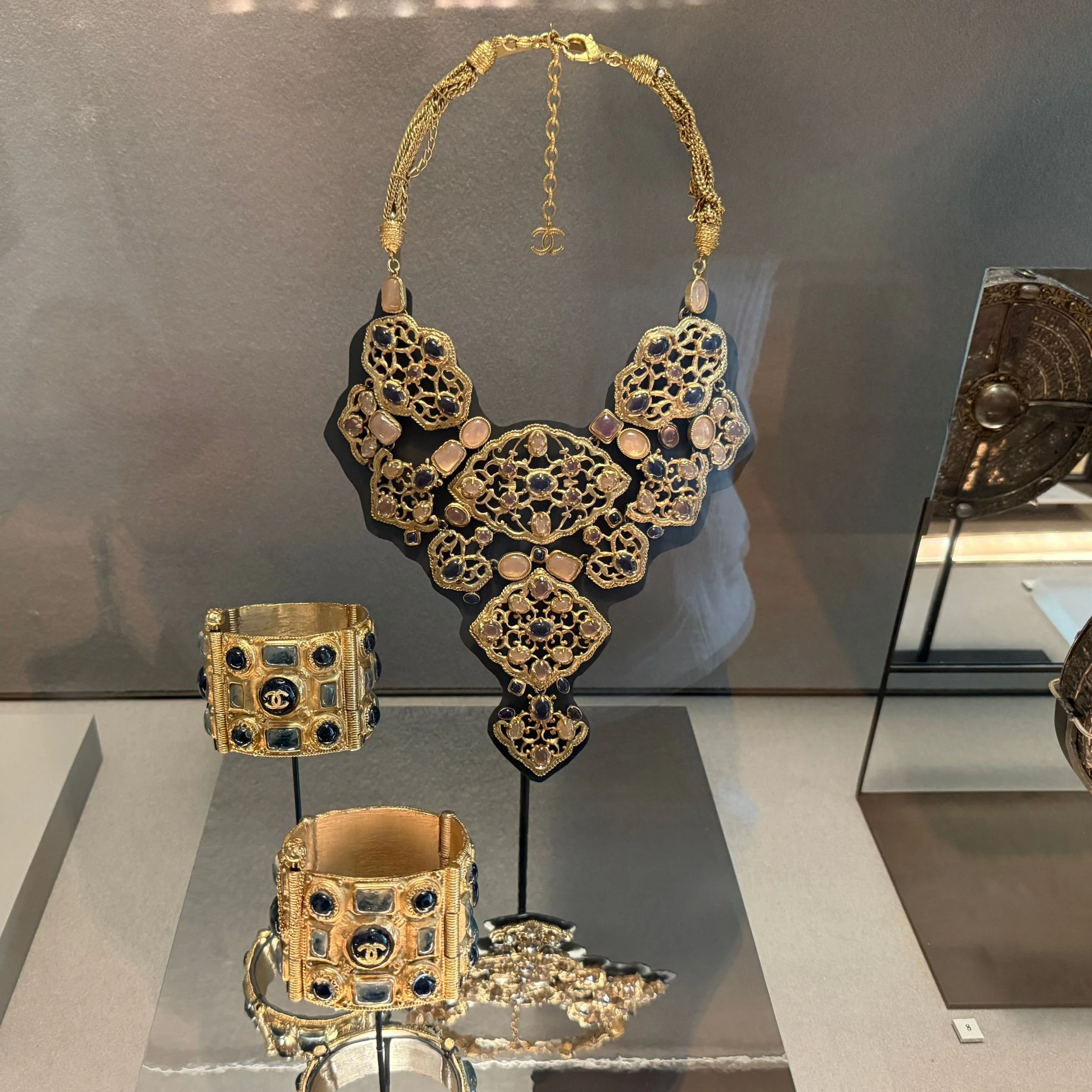
Chanel by Karl Lagerfeld, Paris-Byzance collection (2010–2011). Gilded cuff and necklace shown as part of the Louvre Couture exhibition
19 – Chanel by Karl Lagerfeld, Trompe-l'œil Clutch (2004–2005)
A book, but not a book. This miniature quilted leather bag caught so many people by surprise — a witty play on the art of display.
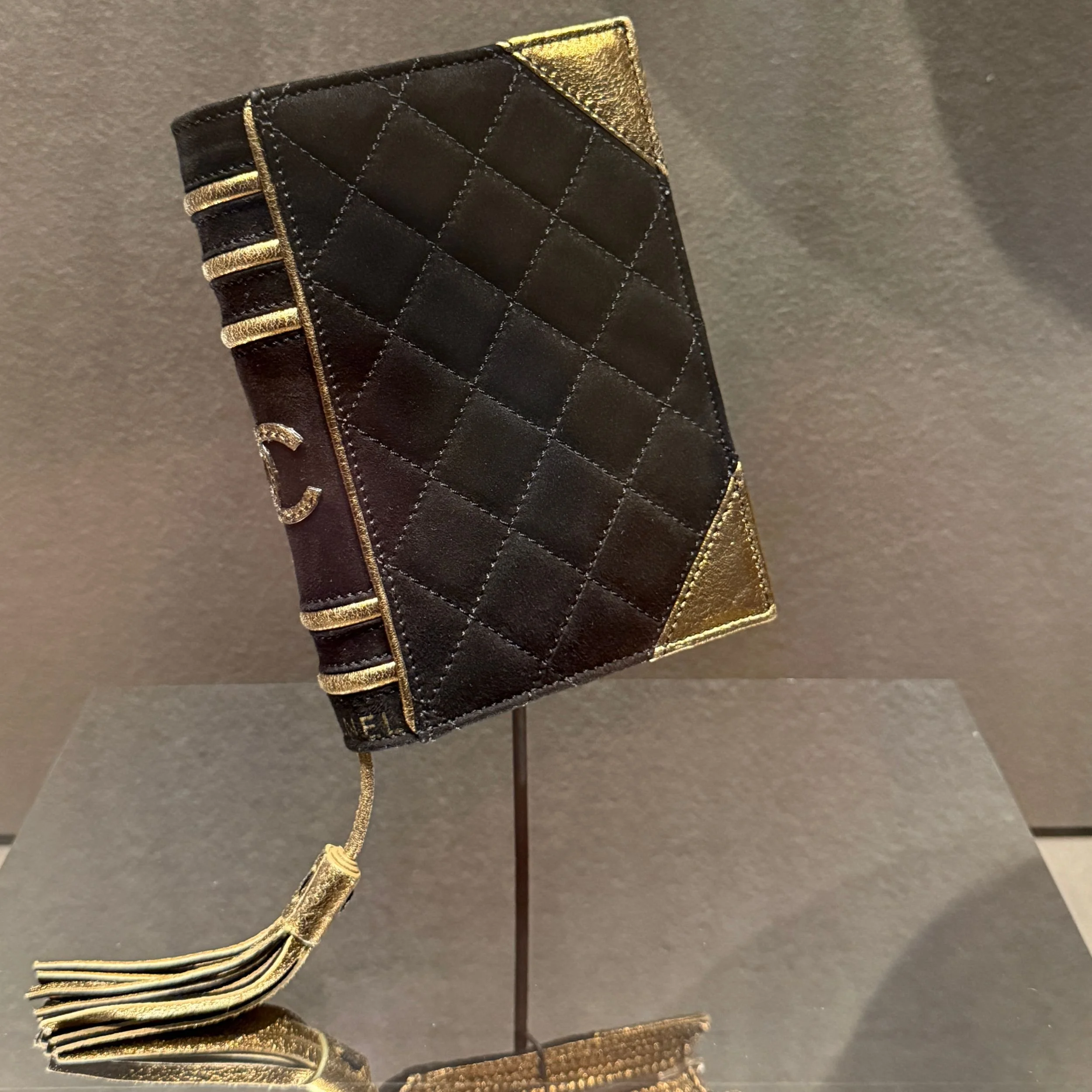
Chanel by Karl Lagerfeld, trompe-l'œil clutch (2004–2005) shown as part of the Louvre Couture exhibition
20 – Loewe by Jonathan Anderson, Blue Shirt with Wings (2023–2024)
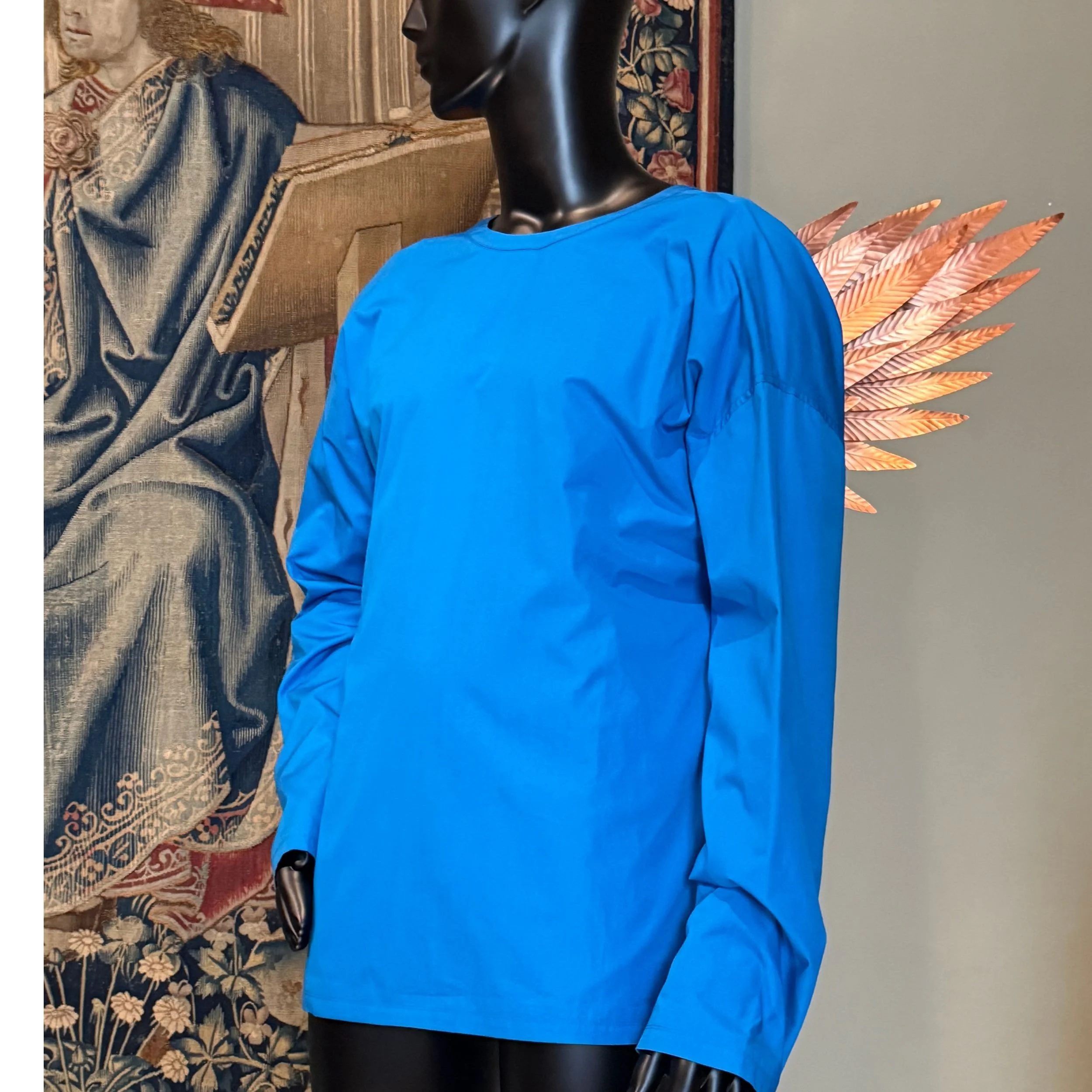
Loewe by Jonathan Anderson, blue shirt with wings (2023–2024) shown as part of the Louvre Couture exhibition
A simple silhouette transformed by metallic copper wings. Presented next to a medieval angel sculpture, this piece glowed in its own modern sanctity.
21 – Hermès by Nadège Vanhée, Horn and Lambskin Dress (2021)
A modern take on chainmail, suspended in a grid-like lattice over a cream silk dress. Reminiscent of medieval armour but utterly contemporary in execution.
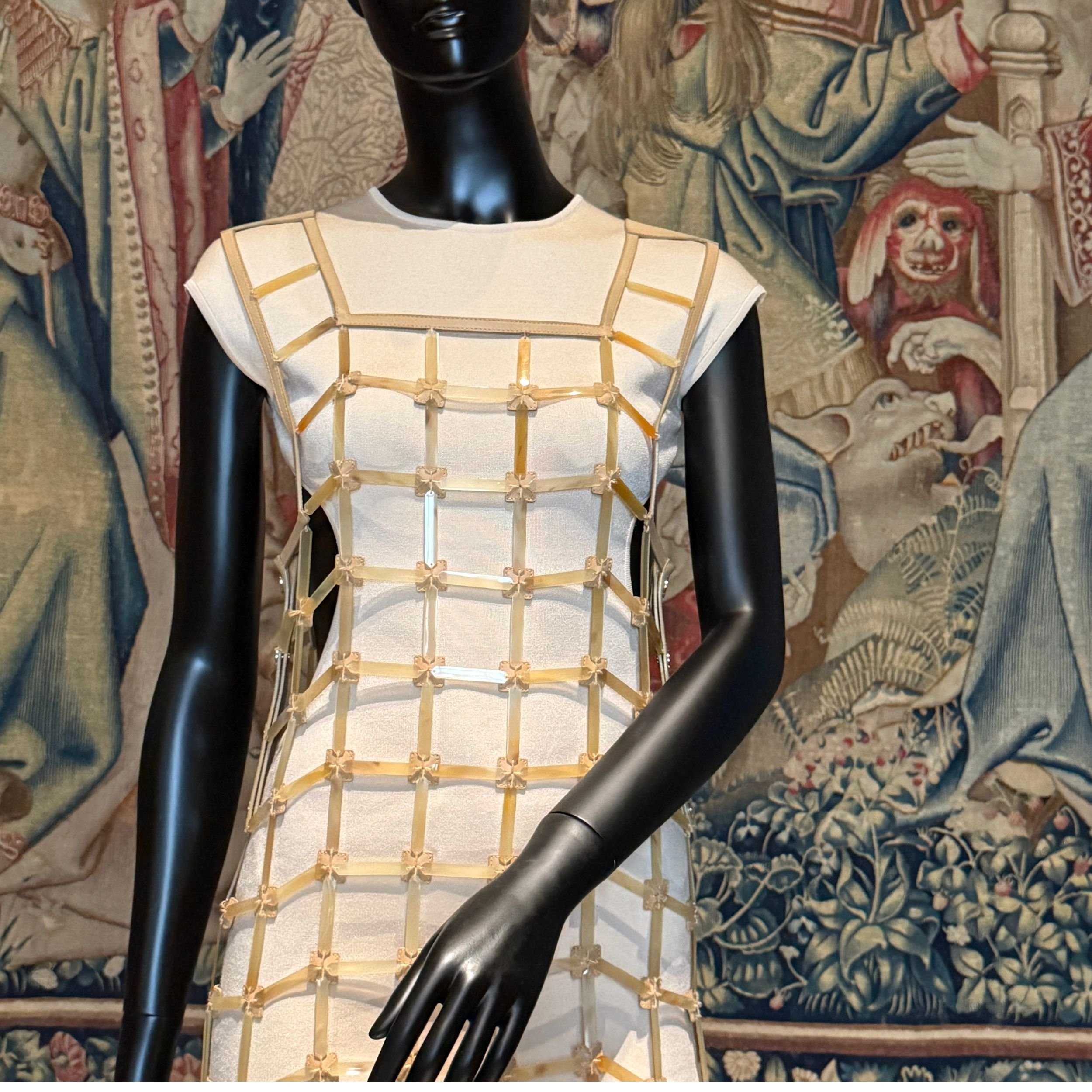
Hermès by Nadège Vanhée, horn and lambskin dress (2021) shown as part of the Louvre Couture exhibition
26 – Chanel by Karl Lagerfeld, Paris-Édimbourg Collection (2012–2013)
My favourite piece in the exhibition. This short tweed dress, edged in feathers and embroidery, looked completely at home against the deep tones of the hunting tapestry behind it. A masterclass in texture, silhouette, and setting.
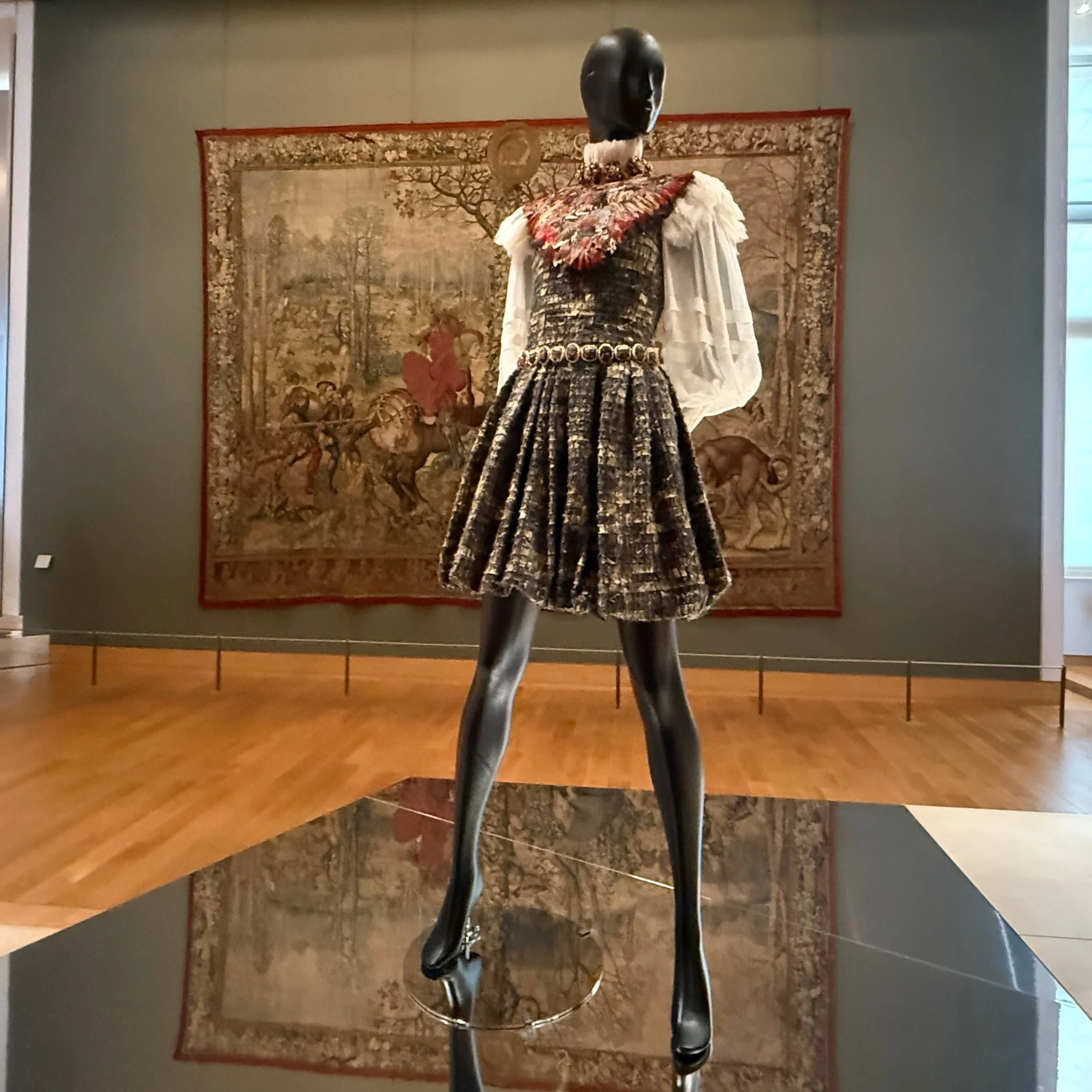
Chanel by Karl Lagerfeld, Paris-Édimbourg collection dress shown as part of the Louvre Couture exhibition
32 – Alexander McQueen, ‘Plato’s Atlantis’ (2010)
Vibrant reptilian textures and intricate tailoring brought this short McQueen piece to life. Set amongst tapestries, it felt like a creature emerging from another dimension.
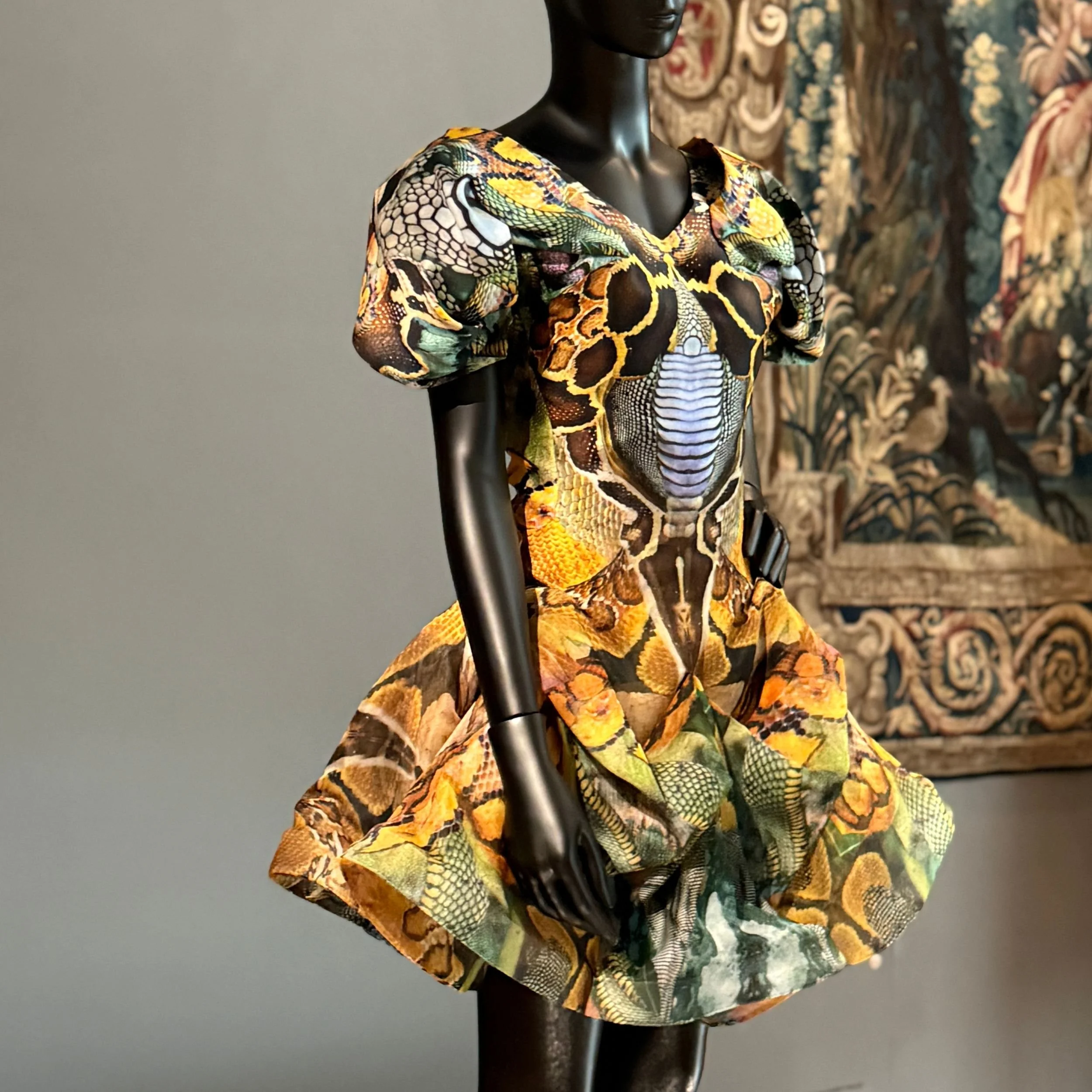
Alexander McQueen ‘Plato’s Atlantis’ dress from 2010 shown as part of the Louvre Couture exhibition
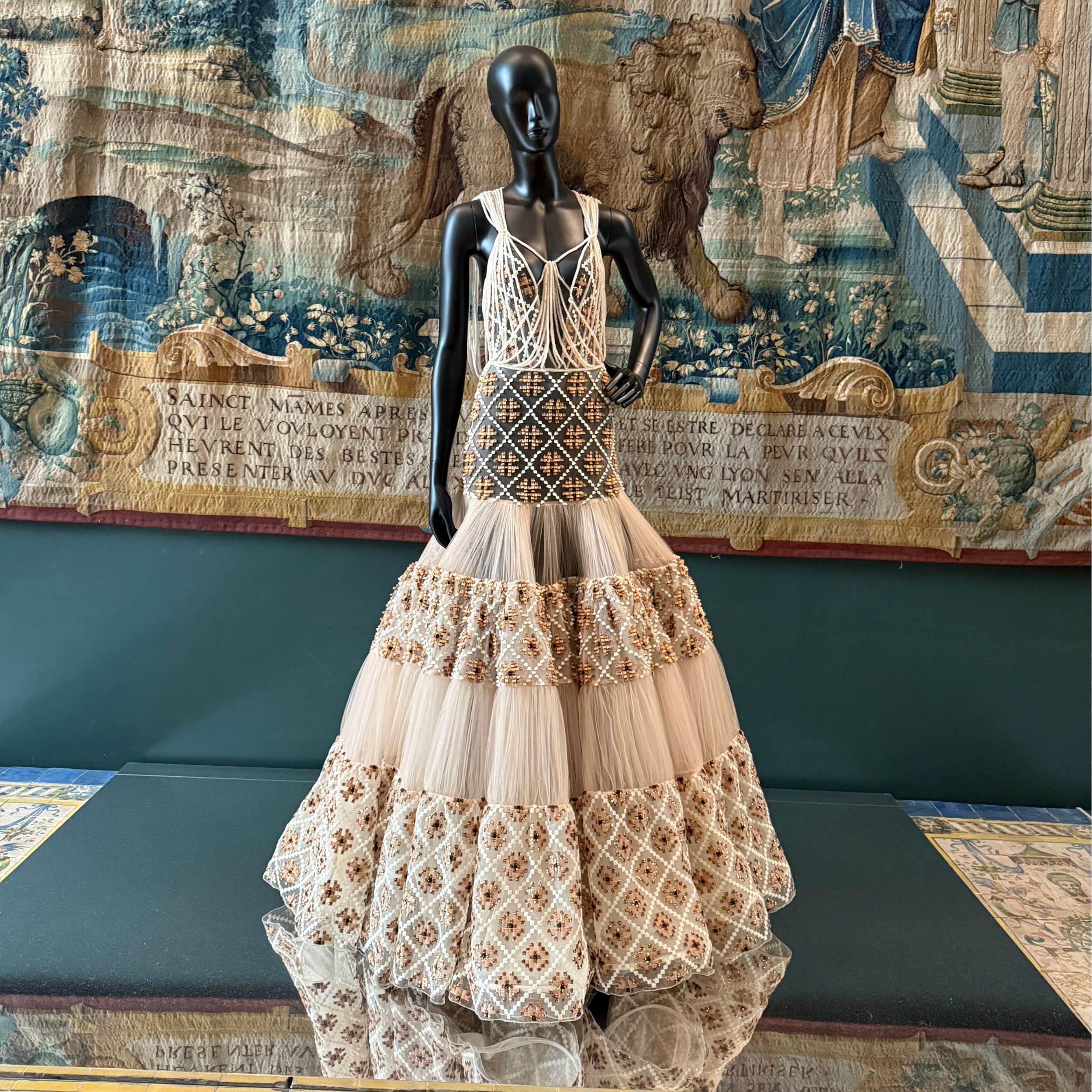
51 – Fendi by Silvia Venturini Fendi (2019–2020)
This heavily embellished tulle gown stood tall against a dramatic backdrop of myth and text. Modern craftsmanship in quiet conversation with ancient weaving.
75 – Balenciaga by Cristóbal Balenciaga (1961–1968)
This felt more like an art installation than a dress. A cloud of structured white volume floating in an 18th-century salon — a stark and beautiful contrast.
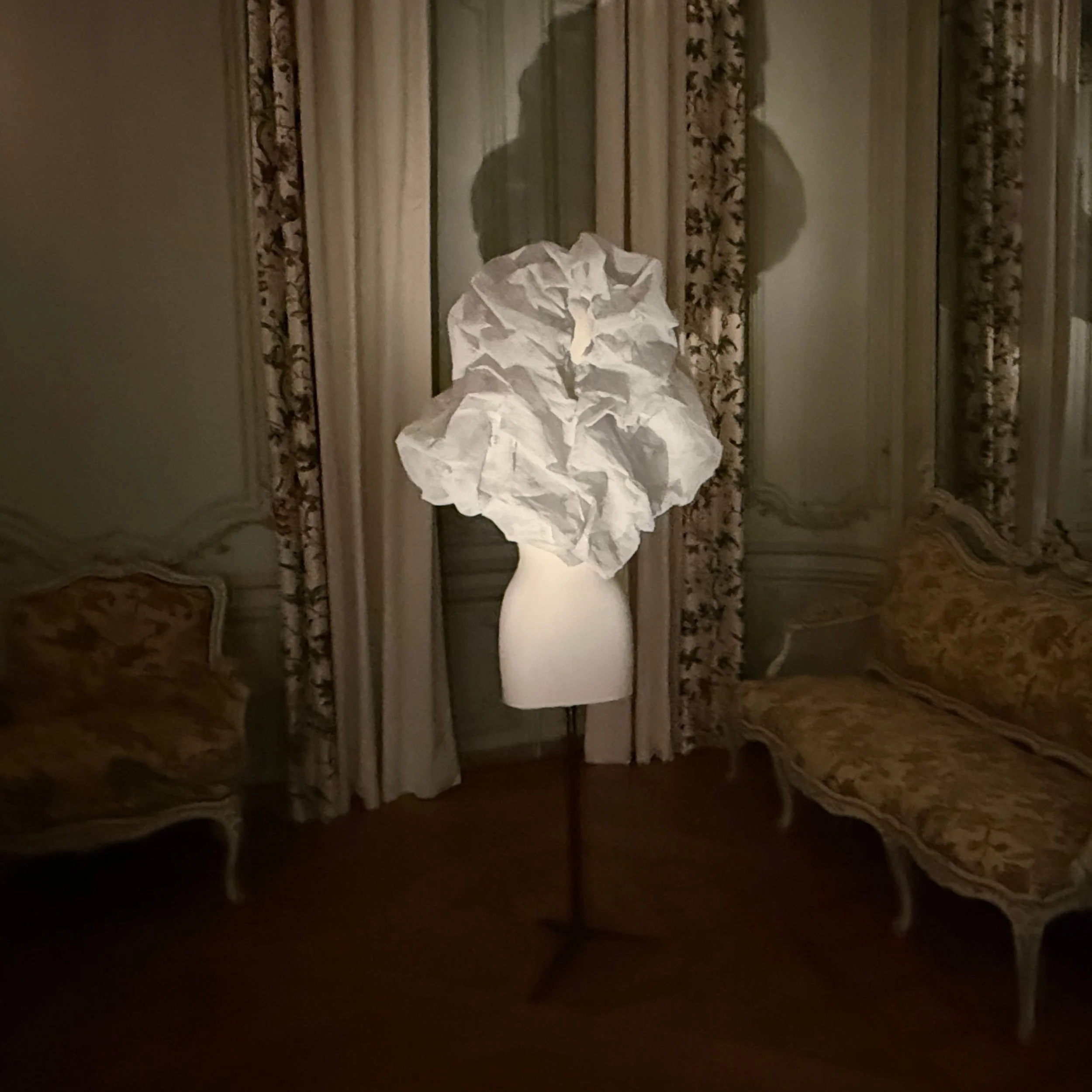
Balenciaga by Cristóbal Balenciaga (1961–1968) shown as part of the Louvre Couture exhibition
76 – Maison Margiela, Artisan Collection (2014–2015)
Presented like part of the furniture — quite literally. This embroidered bodice and dotted skirt matched the salon’s upholstery with uncanny precision.
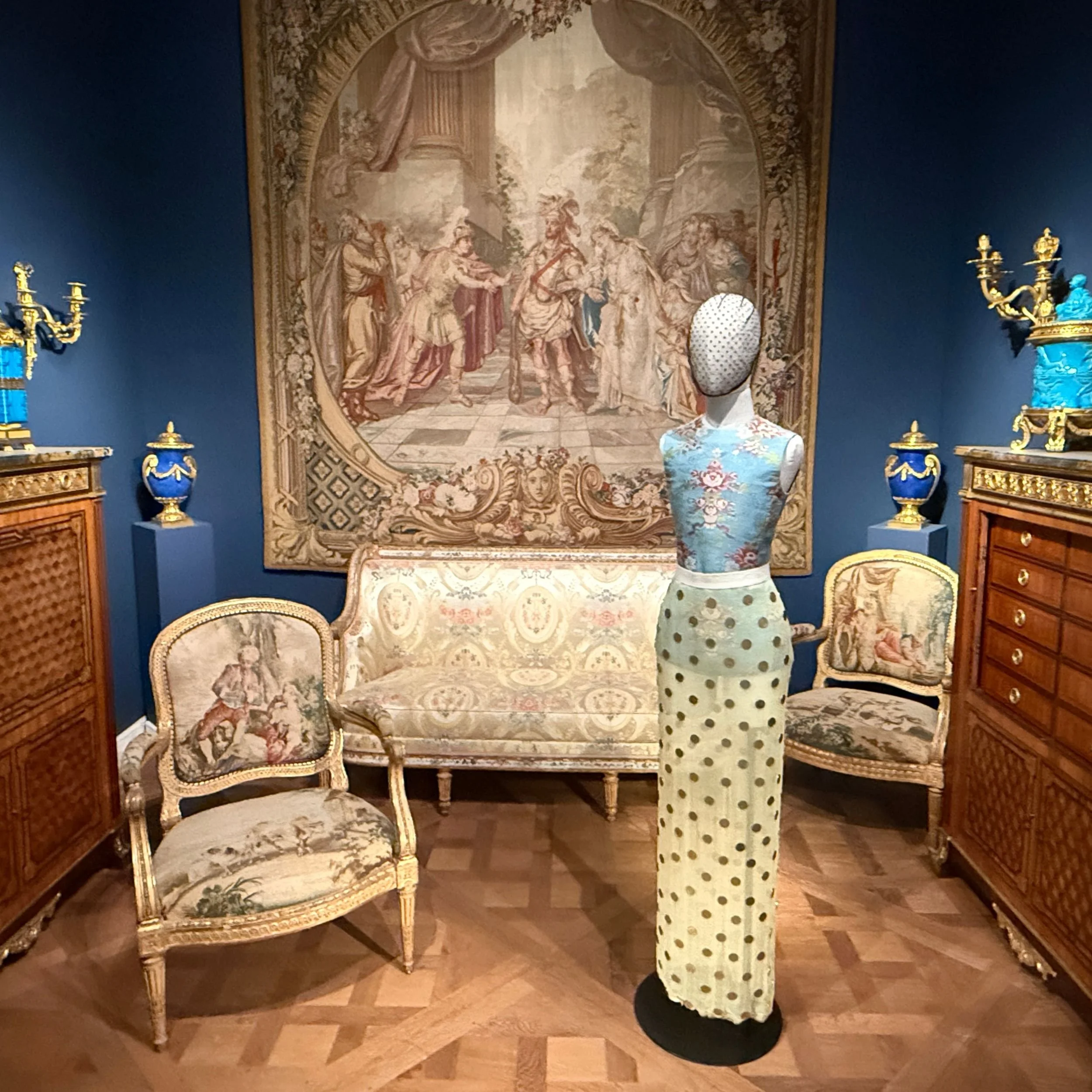
Maison Margiela, Artisan Collection (2014–2015) shown as part of the Louvre Couture exhibition
95 – Christian Dior by John Galliano (2005)
Opulence in full effect. This red embroidered ballgown with ermine-trimmed hem was perfectly staged in the Salon de Napoléon. It looked like it had never left.
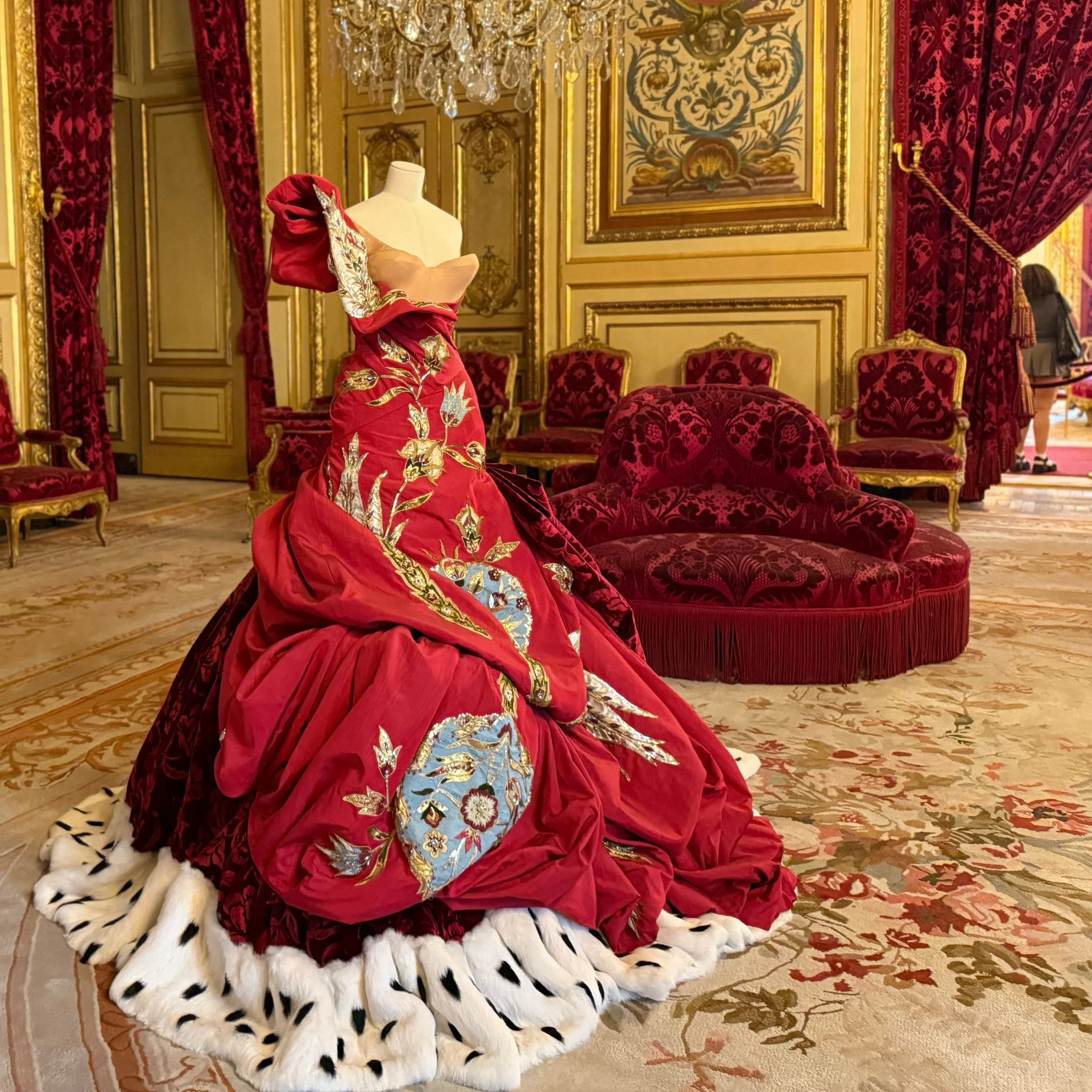
Christian Dior by John Galliano, 2005. A red embroidered ballgown with ermine-trimmed hem shown in the Salon de Napoléon as part of the Louvre Couture exhibition
The Louvre Fashion Exhibition
A once-in-a-lifetime exhibition that could only be at the Louvre.
Is it any coincidence that the world’s greatest fashion houses are based here in Paris, just a stone’s throw from the Louvre? It’s as if these designers have spent days wandering these very halls, sketching and absorbing centuries of inspiration. The Louvre becomes not only a setting, but a creative wellspring — an extraordinary showcase for the greats.
This is a wonderful exhibition — and clearly the result of an enormous curatorial effort. It’s not just about selecting 99 fashion pieces. It’s about finding their echoes in the museum’s vast collection and placing them with thought and purpose.
And it works on multiple levels. If you simply want to admire beautiful pieces and take in the craftsmanship, you can. If you want to trace artistic lineages and spot moments of inspiration, you can do that too. But perhaps most importantly, the exhibition gently draws your eye to the museum’s permanent holdings. Works you might otherwise walk past — medieval textiles, Byzantine jewellery, even cabinet legs — suddenly feel vital. Fashion gives them a modern context.
That, I think, is what makes Louvre Couture so successful. It’s not just that the fashion is extraordinary — it’s that the pairing elevates both. And I suspect very few institutions could have pulled this off. The V&A might match the flair. But the depth and scale of the Louvre’s collection? That’s something else entirely.
Looking for more inspiration? You can find more of my favourite displays on Pinterest: Louvre Couture.
If you're looking for more beauty on a Fashionable long weekend in Paris, have you considered dining at Le Train Bleu or adding a splash of modern colour at Tous Léger! by the Luxembourg Palace?